

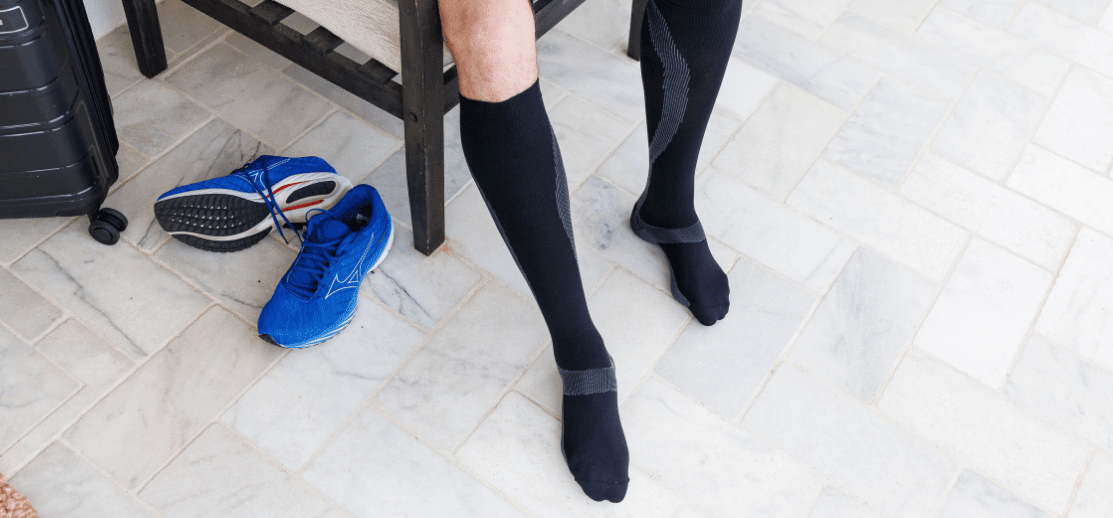
It isn't just the temperature. It's what cold does to your circulation and what to do about it.
Every winter, the same complaints return to podiatry clinics across the country: cold, aching feet that never quite warm up. Ankles that feel tight and swollen by evening. Legs that throb after a long flight home for the holidays. Most people blame the weather. The weather is only half the story the other half is circulation, and it's the half you can actually do something about.
What Cold Weather Actually Does to Your Circulation
When your body senses a drop in temperature, it protects your core by narrowing the blood vessels in your extremities, a process called vasoconstriction. Less blood reaches your feet, ankles, and hands, which is why they're often the first parts of you to feel cold. But reduced blood flow doesn't just feel unpleasant. It slows the return of fluid from your lower legs back toward your heart, which is exactly the mechanical process compression is designed to support.
Add a long-haul flight, hours of sitting through holiday travel, or simply less daily movement in the colder months, and you have a perfect storm: constricted vessels, sluggish venous return, and extended immobility all working against your circulation at once.
- Cold feet that won't warm up, even indoors or under blankets
- Swollen ankles that worsen through the day or after travel
- Heavy, tired legs after sitting for extended periods
- Restless legs that disrupt sleep on flights or long car trips
Compression doesn't fight the cold it supports the exact mechanism the cold is working against.
Why Graduated Compression Is the Clinical Answer
This is where medical grade compression earns its place in winter foot care not as a comfort accessory, but as a mechanical solution to a mechanical problem. Graduated compression applies precisely calibrated pressure that is firmest at the ankle and gradually decreases up the leg, actively assisting blood flow back toward the heart rather than letting it pool in your lower limbs.
It's also the reason compression is standard clinical advice for anyone facing extended immobility most notably air travel, where the combination of prolonged sitting, cabin pressure changes, and reduced movement raises the risk of deep vein thrombosis (DVT), ankle swelling, and that unmistakable tired, achy feeling that follows you off the plane.

Built for Every Cold-Weather Scenario
Whether you're flying home for the holidays, spending long days at a desk while the temperature drops outside, or simply noticing your circulation isn't what it used to be once winter sets in, the same principle applies: support the return of blood flow, and the cold, heavy, aching feeling has far less room to take hold.
Flight & Recovery Compression Socks are designed to be worn for the duration of a flight or recovery period, and many wearers find relief extends well beyond travel days into daily life through the colder months, when circulation needs the most help.
Don't let winter dictate how your legs feel by evening.




Share:
Why Cold Weather Is the Hardest Time for Achilles & Calf Recovery
Electric Foot File vs Manual: Why Podiatrists Recommend Going Electric