

The science behind why your tendon pain worsens in winter and the protocol podiatrists recommend to break the cold-weather cycle.
Every winter, podiatry clinics see a predictable surge. The patients aren't new they're the same people who managed their Achilles pain through spring and summer, only to find it suddenly, stubbornly worse when the temperature drops.
This isn't a coincidence. Cold weather creates a perfect storm of physiological conditions that slow tendon healing, increase stiffness, and raise the risk of re-injury often undoing months of careful rehabilitation in just a few weeks. Understanding exactly why this happens is the first step to preventing it.
01 The Science
Why Temperature Changes Everything For Tendons
The Achilles tendon is not a passive rope connecting muscle to bone. It is a metabolically active, viscoelastic tissue one that is acutely sensitive to temperature. When ambient temperature drops, tendon collagen fibres become measurably stiffer and less pliable, exactly like a rubber band left in a cold car. A stiffer tendon absorbs less of the force generated by each footstrike and transfers more of that load directly to already-irritated tissue.
Unlike muscle, which is richly vascularised and warms relatively quickly under exertion, tendons have a notoriously limited blood supply even under optimal conditions. This is precisely why tendinopathy heals more slowly than muscle strains. In cold weather, what little circulation the tendon receives is further compromised by the body's thermal conservation response which preferentially routes warm blood toward vital organs, leaving peripheral structures like the Achilles further behind.
02 · Circulation
The Vasospasm Problem: Why Your Tendon Starves in Winter
In cold conditions, the body initiates vasospasm a reflexive narrowing of peripheral blood vessels to minimise heat loss. For most tissues, this is a temporary inconvenience. For the Achilles tendon, already operating against a limited vascular supply, vasospasm can substantially reduce the delivery of oxygen, nutrients, and repair proteins to healing tissue.
This is particularly damaging during the reactive phase of tendinopathy, when the tendon is actively mounting a cellular repair response. Without adequate blood flow, that response is blunted. The tendon cannot efficiently clear metabolic waste, collagen synthesis slows, and the cycle of irritation extends far longer than it otherwise would.
This is exactly the mechanism that medical-grade compression addresses. Graduated compression applied to the lower leg supports venous return and maintains peripheral circulation counteracting the vasospastic effect of cold temperatures and keeping the tendon's already-limited blood supply working in its favour. This is why the Foot & Ankle Compression Sleeves in the Active Recovery Trio are the foundation of any cold-weather Achilles protocol: not comfort compression, but clinically certified Class 2 compression that actually changes what's happening at the tissue level.
03 · Morning Pain
Why First Steps Are Always Worst and Worse in Winter
If you manage Achilles or calf tendinopathy, first-step morning pain is already characteristic of your condition. In winter, this symptom is typically amplified sometimes dramatically. The reason involves two compounding factors that hit simultaneously.
During sleep, the body naturally cools and the foot rests in a position of plantar flexion toes pointed downward allowing the Achilles and plantar fascia to shorten gradually overnight. In warmer months, the transition from this shortened, cooled state to weight-bearing is uncomfortable but brief. In cold weather, the tendon begins in a state of greater overall stiffness due to ambient temperature, and the overnight shortening compounds that further. The result is significantly elevated first-step pain that can persist for twenty to thirty minutes considerably longer than the five to ten minutes more typical in warmer conditions.
04 · Protocol
The Winter Recovery Protocol: What Podiatrists Recommend
1. Pre-warm before first load. Before first steps in the morning, apply the Magnesium Roll On directly to the calf and Achilles. The menthol provides immediate localised warming, the magnesium supports muscle relaxation, and the arnica addresses underlying inflammation preparing the tendon for load before it is asked to bear any.
2. Compress before activity, not after. Put on your Foot & Ankle Compression Sleeves before your warm-up begins, not after. Proactive compression maintains peripheral tissue temperature and supports circulation throughout the session not simply managing swelling afterward. ARTG-certified 23–32 mmHg compression changes what's happening at the tissue level from the first minute.
3. Extend your warm-up by 50% in winter. Non-negotiable for anyone with active tendinopathy or a history of Achilles issues. If your standard warm-up is ten minutes, make it fifteen. The tendon needs more time to reach functional tissue temperature and in cold conditions, the cost of skipping this is high.
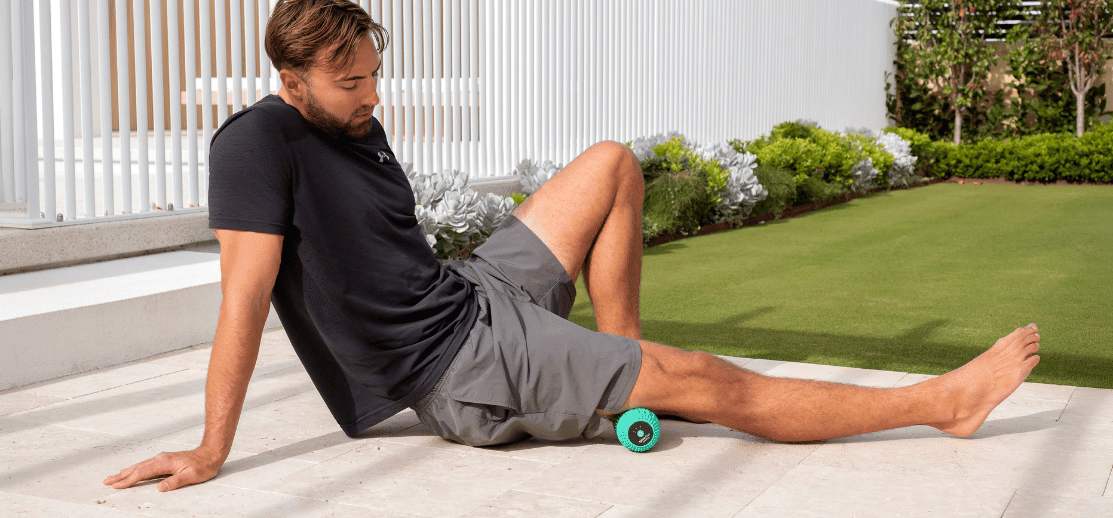
4. Roll post-session before the tissue cools. Use the RelaxaPulse on the calf, Achilles, plantar fascia and surrounding tissue within ten minutes of finishing activity while circulation is still elevated. The tri-directional rotation and 90 acupressure points release tight muscle bands and trigger points with the precision of a professional massage. Start on setting one for the calf, build to setting two or three for deeper tissue.
5. Finish with the roll-on for deep tissue recovery. Apply the Magnesium Roll On directly to the Achilles and calf after rolling. Magnesium applied transdermally supports muscular relaxation at a cellular level; combined with menthol cooling and arnica's anti-inflammatory action, this is the final stage of a complete recovery sequence not a supplement to it.
05 · The System
The Active Recovery Trio: A Complete Recovery Sequence
Most recovery products are sold as standalone solutions. The Active Recovery Trio is built around a different premise: each product enhances the effectiveness of the next. In cold weather, this sequencing is not just convenient it is clinically logical.
| 1. |
Foot & Ankle Compression Sleeves · SynxPlus
Prime Circulation
ARTG-approved Class 2 Medical Compression (23–32 mmHg) not a sports sleeve making therapeutic claims, but a genuinely certified medical device. Wear from the moment you wake to counter morning vasospasm, maintain peripheral tissue temperature, and keep blood flow moving to the Achilles and plantar fascia throughout the day. Comfortable for 24/7 wear during acute recovery phases. |
|
| 2. |
RelaxaPulse Vibrating Massage Roller · SynxPlus Open the Muscle Tri-directional rotation across 90 strategically placed acupressure points with four customisable pulse settings. Post-session, work the RelaxaPulse along the calf belly, Achilles insertion, plantar fascia, hamstrings and hip flexors releasing the tight muscle bands that cold weather exacerbates and compression has warmed and primed. The depth and precision of a professional massage in a cordless device that fits in a gym bag. |
|
| 3. |
Sports Massage Magnesium Roll On · SynxMedi Deliver the Recovery 32% pharmaceutical magnesium with menthol and arnica Australian-made, 100% plant-based, zero stickiness. Applied after rolling while the tissue is open and circulation is active, transdermal magnesium supports muscular relaxation at a cellular level. The menthol provides immediate cooling relief to post-training soreness and burning feet; arnica addresses the underlying inflammation that cold weather amplifies. The final stage of a recovery sequence that compounds with every session. |
|


Used individually, each of these products delivers genuine clinical benefit. Used together in sequence compression to prime, roller to open, roll-on to recover they compound. The consistency of this routine across a winter training block is what separates the athletes and workers who come out of the cold months stronger from those who spend spring rebuilding from setbacks.
Clinically Backed. Naturally Supported.
Active Recovery Trio For Runners, Athletes & Anyone On Their Feet
ARTG-approved medical compression meets 100% plant-based Australian-made magnesium recovery clinical credibility and natural ingredients working together in the same routine. Ideal for runners and gym-goers managing training load, nurses and teachers on their feet all day, and anyone navigating Achilles tendinopathy, plantar fasciitis, tight calves or post-training soreness through the winter months.




Share:
Why Podiatrists Recommend Electric Files Over Manual - Corns, Warts & Fungal Nails
Why Your Feet Feel Heavier and Sorer In Winter