

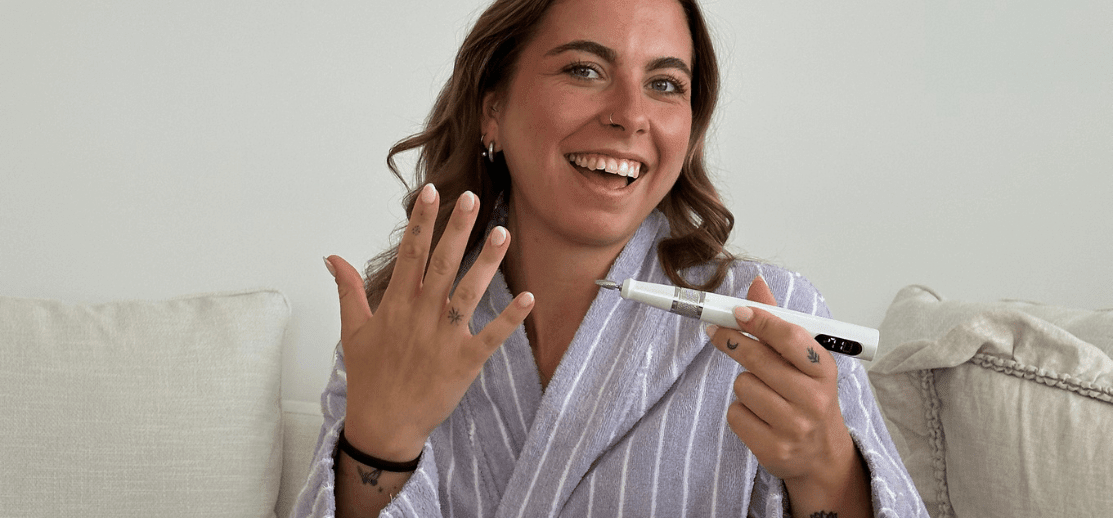
For generations, the humble emery board, pumice stone, and nail file were the go-to instruments for at-home foot care. They were simple, inexpensive, and mostly got the job done. But podiatrists have known for years what's now becoming common knowledge in the homes of everyday Australians: electric files deliver measurably better outcomes, with less effort and significantly less risk of over-filing.
This isn't marketing. It's a clinical reality backed by the same rotary instruments podiatrists have used in clinic for decades. The question was never whether powered filing works. It was whether everyday people could access that same precision at home. Now, they can.
The Problem with Manual Tools
Manual filing relies entirely on inconsistent human pressure push too hard in one spot, ease off in another, and you end up with uneven results at best, and broken skin or a triggered corn at worst. The abrasive surfaces of pumice stones and metal rasps remove skin in one direction only, creating micro-tears in healthy tissue surrounding the area you're actually targeting.
For conditions like fungal nails or thickened nails, manual tools present an even greater challenge. The hardened nail plate resists flat filing. Without enough angle and rotational action, you're unlikely to get below the surface layer where fungal infection resides meaning topical treatments applied afterwards have less surface area to penetrate.
"The key to effective nail and skin care isn't force it's controlled, consistent rotation. That's what separates a professional result from an amateur one."
The Evidence: What Rotational Filing Actually Does
01 Precision That Protects Healthy Tissue
Rotational filing, when set at appropriate speeds, removes targeted tissue concentrically rather than in aggressive linear strokes. This means the surrounding healthy skin is exposed to far less mechanical stress. Podiatrists use variable-speed handpieces precisely because different conditions require different intensities: slow speeds for sensitive areas, higher RPM for hardened callus and thickened nails.
The SynxPedi Precision Pen applies this same logic with its LCD speed control letting you dial in the right intensity rather than committing to the same aggressive stroke you'd apply with a manual rasp.
02 Fungal Nail Treatment Gets Dramatically More Effective
This is perhaps the most clinically significant advantage. Onychomycosis (fungal nail infection) is notoriously difficult to treat because topical antifungals must penetrate the nail plate to reach the infected nail bed beneath. Studies consistently show that debridement the mechanical removal of thickened, infected nail tissue before applying topical treatment significantly increases treatment success rates.
Manual filing is rarely sufficient to achieve true nail thinning on heavily affected nails. Electric filing at 35,000 RPM removes material efficiently and evenly, creating a thinner nail surface for antifungals to penetrate. The podiatrist-recommended protocol is now:
Use the Nail Head attachment to debride thickened or fungal nail material
Apply topical antifungal product to the thinned nail surface
Repeat filing every few days during the treatment cycle
This cycle debride, treat, repeat is the same approach used in clinic. The Precision Pen makes it accessible at home.
03 Corns and Warts Respond Faster
Corns form when repeated mechanical pressure causes a hyperkeratotic plug to develop in the epidermis. Treating them manually is slow and imprecise; the plug is often surrounded by healthy tissue that gets inadvertently damaged by aggressive filing. The Derma Head attachment on the SynxPedi Precision Pen is specifically designed for skin work smaller, more targeted, and gentle enough to work around sensitive tissue while still having the rotational speed to reduce the corn effectively.
For plantar warts, the same principle applies: using the Derma Head to remove the overlying hard skin before applying a topical wart treatment allows the active ingredient to penetrate directly to the viral tissue rather than sitting on top of hardened skin.

When You Need More: The 3-in-1 Polisher
While the Precision Pen handles the targeted, precision-first work of nails and individual skin lesions, there's a second category of electric filing that podiatrists recommend for whole-foot care: the rotating polisher designed for callus, cracked heels, and nail maintenance at scale.
The SynxPedi 3-in-1 Electric Foot Polisher addresses this with three specialist attachments a sanding head for intensive callus removal, a nano glass head for fine polishing, and a nail sanding head for general thickened nail maintenance. Six variable speed settings and whisper-quiet operation make it approachable even for those new to powered foot care.
The Nano Glass Difference
One of the most underrated advances in at-home foot care is nano glass technology. Unlike traditional pumice, which removes skin through abrasion with irregular particles, nano glass buffs using a uniformly structured micro-surface. The result is smoother, more even skin with less irritation of surrounding tissue.
The SynxPedi Nano Glass Foot Smoother a standalone tool and also the finishing attachment on the 3-in-1 Polisher is podiatrist-approved for all skin types including sensitive skin, and can be used wet or dry for different levels of intensity.
The Podiatrist-Recommended Home Protocol
Based on the product design and clinical rationale behind both SynxPedi devices, here's the home care protocol your podiatrist would likely endorse:
For fungal or thickened nails: Use the Precision Pen (Nail Head) to debride 2–3 times per week. Apply antifungal topical directly after filing while the nail surface is most receptive. Continue over a full treatment cycle nail improvement takes months, not days.
For corns and warts: Use the Precision Pen (Derma Head) to reduce overlying hard skin. Apply your topical treatment. Repeat the filing every few days to maintain surface access for the active ingredient. Use foam cushions to deflect pressure between treatments.
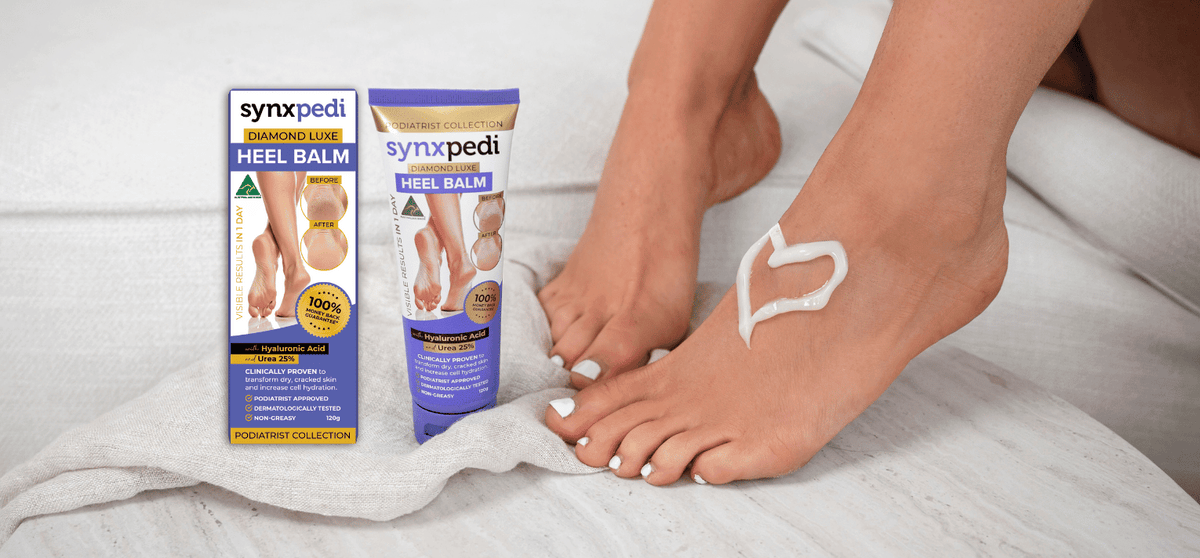
For general callus and cracked heels: Use the 3-in-1 Polisher (Sanding Head) every 2–3 weeks for intensive removal. Follow with the Nano Glass Head to refine. Apply Diamond Luxe Heel Balm 25% urea with AHA/BHA complex to lock in hydration and continue the keratolytic work between polishing sessions.
The Bottom Line
Electric filing isn't a gadget trend. It's the convergence of clinical practice and accessible consumer design. The rotational mechanics, variable speed control, and targeted attachments that podiatrists have long relied on are now available in two compact, rechargeable devices that fit in a bedside drawer.
If you've been managing corns, fungal nails, or callus with manual tools and wondering why results are slow this is why. The evidence is in the technique, not just the effort.
Both the SynxPedi Precision Pen and the 3-in-1 Electric Foot Polisher are backed by SynxBody's 30-day money-back guarantee. Try them, and feel the difference a professional-grade rotation makes.




Share:
Corns, Calluses & Blisters? A Podiatrist Explains Why
Why Cold Weather Is the Hardest Time for Achilles & Calf Recovery